For many SMEs, the sales pipeline can create a sense of reassurance. There are enquiries in progress, quotations have gone out and a few prospects seem interested. On paper, things can look reasonably healthy.

But I often ask business owners a simple question: how much of that pipeline is genuinely likely to turn into profitable business?

That is where the real conversation starts.

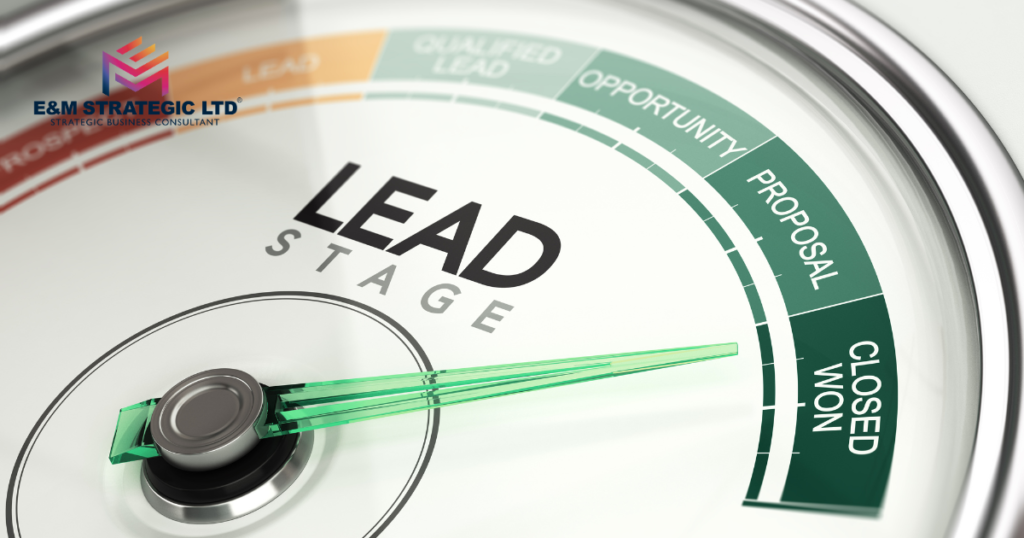
Effective sales pipeline management for SMEs is not about having a long list of names on a spreadsheet or CRM system. It is about understanding which opportunities are real, what stage they are at, what needs to happen next and whether the overall pipeline is strong enough to support future revenue targets.

For SMEs across Staffordshire, Wolverhampton, the West Midlands, Telford and Shropshire, this matters more than ever. When costs are under pressure, businesses need greater certainty around future sales. An optimistic pipeline can be reassuring, but it can also be misleading.

What does a strong sales pipeline really look like?

A good sales pipeline should show every genuine opportunity and where that prospect currently sits within the buying process.

Depending on the business, that might include initial enquiry, qualification, meeting, proposal, negotiation and final decision.

Every opportunity should also have a value, an expected decision date and a clearly defined next action.

One question I regularly ask SME owners is:

If your current pipeline performs as expected, will it generate enough profitable revenue to achieve your targets?

If the answer is unclear, then the pipeline probably needs closer attention.

A strong pipeline should also form part of a wider SME sales strategy, linking lead generation, sales activity, conversion and forecasting.

Are all your opportunities genuine?

One of the most common problems I see is optimism.

A prospect has had a meeting, asked for some information or responded positively to a proposal, so they remain in the pipeline for weeks or even months.

But interest is not the same as intent.

A genuine opportunity should normally have a clear requirement, a realistic timescale and some understanding of how the buying decision will be made.

I would rather see a smaller, realistic pipeline than a large one full of opportunities that have little chance of progressing.

Removing weak opportunities can make the figures look worse initially, but it gives the business a far better basis for planning.

How old are your opportunities?

Age is another important indicator.

If your normal sales cycle is six weeks but an opportunity has been sitting there for six months with very little movement, is it still really an opportunity?

There may be valid reasons for delays, especially with larger contracts or more complex buying decisions, but ageing opportunities can quickly distort the overall picture.

When I review a pipeline, I look closely at anything that has stopped moving. It may need renewed attention, a different approach or, in some cases, removal altogether.

Does every opportunity have a next action?

This is one of the simplest tests of pipeline quality.

“We need to follow them up” is not a next action.

“Telephone the managing director on 12 October to review the proposal” is.

Every genuine opportunity should have a specific next step, a responsible person and a date.

Without this discipline, follow-up becomes inconsistent and potentially valuable opportunities can quietly disappear.

For many SMEs, improving this one area can make a noticeable difference to sales performance.

Are you measuring conversion rates?

Knowing the total value of the pipeline is useful, but it only tells part of the story.

An SME should understand how effectively opportunities move through each stage of the sales process.

If 50 enquiries produce 20 meetings, 10 proposals and three orders, there is valuable information in those figures.

Where are prospects being lost?

Are the wrong enquiries being generated? Are meetings failing to uncover the real customer need? Are proposals failing to demonstrate enough value?

In my experience, the answer is often not “we need more leads”. The real issue is that the business is not converting enough of the opportunities it already has.

That is where targeted sales coaching and consultancy can make a real difference.

Is your pipeline actually large enough?

A £500,000 pipeline does not mean £500,000 of future revenue.

If the business usually converts 20% of qualified opportunities, the realistic expectation is much lower.

This is why I encourage SMEs to work backwards from their revenue objectives.

If a business needs £100,000 of new sales and typically converts one in four opportunities, it may need around £400,000 of genuinely qualified pipeline value.

That relationship between pipeline value and conversion rate is critical if forecasts are going to mean anything.

Are you relying on too few customers?

Another issue I frequently see is concentration risk.

The total pipeline might look healthy, but when you examine it more closely, most of the potential value depends on one or two large opportunities.

If one of those slips or disappears, the forecast changes immediately.

A stronger pipeline contains a sensible spread of opportunities across customers, sectors or products. This reduces dependency and gives the business greater resilience.

Are sales and marketing working together?

A weak pipeline is not always a sales problem.

If there are not enough new opportunities entering the top of the pipeline, the business may need to look at its marketing, target market or value proposition.

Sales and marketing should work together. Marketing creates awareness and opportunity; sales turns that opportunity into revenue.

For SMEs across Staffordshire, the West Midlands and Shropshire, that may mean reviewing networking, digital marketing, strategic partnerships, direct prospecting and existing customer development.

Review the pipeline before it becomes a problem

One of the biggest advantages of good pipeline management is that it gives you an early warning.

If there are not enough opportunities entering the pipeline today, the impact on turnover may not show for several months. By then, the problem is much harder to correct.

A regular, honest pipeline review allows SME owners and management teams to challenge assumptions, focus activity and make decisions based on reality rather than hope.

About Phil Edwards

Phil Edwards is the founder of E&M Strategic Ltd and works with SME owners and sales teams to improve sales performance, pipeline management and business growth.

His approach is practical: understand what is really happening in the pipeline, identify where opportunities are being lost and agree clear, measurable actions to improve performance.

If you are unsure whether your current sales pipeline is genuinely capable of delivering your targets, an initial consultation provides an opportunity to review the position and identify where improvements may be needed.

To arrange an initial consultation with Phil Edwards, contact enquiries@eandmstrategic.co.uk.

Sales are the lifeblood of every small and medium-sized enterprise. Without a reliable flow of new customers, repeat business and profitable opportunities, even a well-managed company can begin to lose momentum.

Many SMEs manage sales internally for as long as possible. The owner may have strong commercial instincts, an experienced team or a loyal customer base. However, there often comes a point when existing methods stop delivering the required results.

This is when an experienced SME sales consultant can add real value.

A sales consultant does more than advise a business to increase prospecting or improve follow-up. Their role is to review how the company currently generates revenue, identify weaknesses in the sales process and help create a more structured, accountable and commercially effective sales strategy.

For SMEs across Staffordshire, the West Midlands and Shropshire, external sales support can be particularly valuable when growth has stalled, markets are becoming more competitive or the business is preparing for its next stage of development.

Sales performance has become inconsistent

One of the clearest signs that an SME may need a sales consultant is inconsistent revenue.

The company may experience a strong month followed by a quiet period. New enquiries arrive unpredictably, and sales depend too heavily on referrals, seasonal demand or a small number of repeat customers.

This makes cash flow more difficult to forecast and can prevent the business from making confident decisions about recruitment, investment and expansion.

An SME sales consultant can review where current opportunities originate, how effectively they are converted and whether enough sales activity is taking place to support future revenue targets.

The aim is to replace reactive selling with a more consistent and measurable sales strategy.

The business relies too heavily on the owner

Many SMEs begin with the owner responsible for almost every sale. Their personal relationships, technical knowledge and reputation are often central to winning work.

This may be effective during the early stages of the business, but it can become a barrier to growth.

If every major enquiry, proposal and negotiation requires the owner’s involvement, the business may struggle to increase capacity. The owner also becomes a single point of dependency.

A sales consultant can help document the sales process, improve customer information, strengthen proposals and create a system that other employees can follow.

This helps the company build a sales function that is less dependent on one individual.

Business growth has stalled

An SME may have reached a reasonable level of turnover but then struggle to grow beyond it.

The business may be winning enough work to remain stable, but not enough to recruit, invest or improve profitability. Existing sales methods may simply have reached their limit.

At this point, continuing with the same approach is unlikely to produce a different result.

A sales consultant can help the management team identify new opportunities. These may include targeting different customer groups, entering new geographical areas, improving routes to market, developing existing accounts or strengthening the company’s value proposition.

For a manufacturer in Shropshire, this could involve reviewing distributors or specialist retailers. For a professional services business in Staffordshire, it may mean targeting larger clients. For an SME in the West Midlands, it could involve creating a more focused regional sales campaign.

The sales pipeline lacks structure

Many businesses believe they have a sales pipeline when they actually have a list of contacts and loosely defined opportunities.

Comments such as “they seem interested” or “we will follow up next month” do not provide enough clarity.

A structured sales pipeline should show the value of each opportunity, its current stage, the likelihood of conversion and the next agreed action.

Without this information, it becomes difficult to forecast future revenue or identify where potential sales are being lost.

An experienced business sales consultant can help introduce a practical pipeline-management system and meaningful sales measures. These may include conversion rates, average order value, the number of qualified leads, sales-cycle length and revenue by customer group.

Sales enquiries are not converting

Some SMEs generate a healthy number of enquiries but convert too few of them into paying customers.

The problem may not be lead generation. It may be how enquiries are handled.

Common issues include slow response times, weak qualification, unclear proposals, poor follow-up, excessive discounting or failure to understand the customer’s real priorities.

A sales consultant can review the journey from initial enquiry to final decision and identify where sales opportunities are being lost.

Improving conversion rates can often be more cost-effective than continually spending more money on marketing.

The sales team is busy but results are disappointing

Activity does not always equal performance.

A sales team may attend meetings, send emails and produce proposals without generating sufficient profitable revenue. The problem could be poor targeting, lack of preparation, weak questioning or inconsistent follow-up.

There may also be no clear expectations around sales activity or accountability.

An external sales consultant can assess both the process and the team’s approach. This may involve coaching, reviewing targets, improving sales conversations or helping managers introduce more effective performance reviews.

Independent input can be particularly valuable when internal habits have become difficult to challenge.

The business is entering a new market

Expanding into a new sector or geographical area can create significant growth opportunities, but it also carries risk.

The buying process may be different, customers may have new expectations and the company’s existing sales message may no longer be relevant.

A sales consultant can help the business evaluate the opportunity before committing substantial time and money.

This may include identifying target customers, testing the value proposition, reviewing pricing, assessing routes to market and creating a realistic sales plan.

Existing customers are being overlooked

Many SMEs focus so heavily on winning new business that they fail to develop their existing customer base.

Current customers may be buying only part of the available product or service range. There may also be opportunities to increase order frequency, introduce additional services or reactivate dormant accounts.

An SME sales consultant can help analyse customer purchasing patterns and establish a structured account-development programme.

This can strengthen relationships while creating additional revenue at a lower acquisition cost.

The business needs greater accountability

A sales strategy is only effective when agreed actions are completed.

Many SME owners understand what needs to be done but struggle to maintain consistent sales activity alongside daily operational pressures.

A consultant provides independent challenge and accountability. Progress can be reviewed regularly, obstacles addressed and priorities adjusted when necessary.

This support helps turn good intentions into measurable commercial progress.

Frequently asked questions

What does an SME sales consultant do?

An SME sales consultant reviews current sales performance, identifies weaknesses, develops practical sales strategies and supports the business in improving lead generation, pipeline management, conversion rates and accountability.

When should an SME hire a sales consultant?

An SME should consider external sales support when revenue is inconsistent, growth has stalled, enquiries are not converting, the sales team is underperforming or the business is entering a new market.

What is the difference between a sales consultant and a sales coach?

A sales consultant normally focuses on strategy, systems and commercial performance. A sales coach focuses more closely on improving the skills, confidence and effectiveness of individuals. In many cases, SMEs benefit from a combination of both.

Choosing the right time to seek sales support

An SME does not need to be in crisis before appointing a sales consultant.

The best time to seek support is often when the business recognises that current methods are no longer sufficient, but still has the time and resources to make improvements.

E&M Strategic provides SME sales consultancy, sales coaching and business-growth support to organisations across Staffordshire, the West Midlands and Shropshire.

If your sales performance has stalled, your pipeline lacks structure or your business depends too heavily on referrals or a limited number of customers, contact E&M Strategic to arrange an initial consultation and identify where your sales process could be strengthened.

enquiries@eandmstrategic.co.uk

About Phil Edwards

Phil Edwards is the founder of E&M Strategic Ltd and an experienced sales, marketing and business consultant. He has extensive experience developing profitable sales channels, growing market share and supporting SMEs with sales strategy, market development, coaching and sustainable business growth.

For many small and medium-sized enterprises, sales performance can be unpredictable. One month may produce strong results, while the next is considerably quieter. Revenue may depend too heavily on referrals, seasonal demand, a few major customers or the personal efforts of the business owner.

An effective SME sales strategy replaces this uncertainty with a structured, measurable and repeatable approach to generating consistent revenue.

For SMEs across Staffordshire, the West Midlands and Shropshire, having a clear sales plan is particularly important. Competition remains intense, customer expectations are changing and rising employment and operating costs mean businesses cannot afford an inconsistent sales pipeline.

A successful sales strategy does not simply tell an SME to sell more. It establishes who the business wants to sell to, how it will reach those customers, why they should buy and how sales performance will be measured.

What is an SME sales strategy?

An SME sales strategy is a practical plan for generating, managing and converting sales opportunities.

It should connect the company’s growth objectives with its target customers, marketing activity, sales process and available resources. It should also give the management team clear performance measures against which progress can be reviewed.

Without this structure, sales activity can become reactive. Businesses respond to enquiries as they arrive but fail to maintain the prospecting, customer development and follow-up activity needed to produce consistent sales revenue.

Identify your most profitable target customers

One of the most common SME sales mistakes is attempting to sell to too broad a market. This often results in unclear marketing messages, wasted sales time and low conversion rates.

A more effective approach is to identify the customers most likely to buy, remain loyal and generate an acceptable profit margin.

This may include organisations within a particular sector, businesses of a certain size, customers within a defined geographical area or companies experiencing a specific commercial problem.

For example, a manufacturer in Shropshire may target specialist distributors or retailers. A professional services SME in the West Midlands may focus on clients in selected industries. A Staffordshire business may prioritise customers within a manageable delivery or service area.

The clearer the target market, the easier it becomes to create relevant marketing, focused prospecting and persuasive sales proposals.

Develop a clear value proposition

Potential customers need to understand why they should choose your company instead of a competitor.

A strong value proposition explains the commercial outcome your SME provides. It should go beyond general claims such as excellent service, competitive prices or quality products.

A more persuasive proposition may focus on helping customers:

  • Reduce costs or lead times
  • Increase productivity or profitability
  • Solve a specialist operational problem
  • Improve quality or reliability
  • Reduce commercial risk
  • Access expertise they do not possess internally

This message should be communicated consistently across the website, marketing campaigns, proposals, networking activity and sales conversations.

Create several reliable sources of sales leads

A sustainable sales strategy for an SME should not depend on one source of business.

Referrals are valuable, but they can be unpredictable. Depending entirely on word of mouth can leave significant gaps in the sales pipeline.

Potential sources of new sales opportunities include search engine optimisation, targeted email campaigns, LinkedIn activity, networking, strategic partnerships, trade events, existing customers, supplier relationships and direct prospecting.

For SMEs operating in Wolverhampton, Stafford, Cannock, Stoke-on-Trent, Telford, Shrewsbury and the wider West Midlands, regional business networks can be highly effective. However, networking needs defined objectives and disciplined follow-up if it is to create measurable sales.

Build a consistent SME sales process

A structured sales process guides a potential customer from initial contact through to an order or signed agreement.

A practical process should include:

  1. Identifying and qualifying the prospect
  2. Understanding the customer’s requirements
  3. Presenting an appropriate solution
  4. Addressing questions and objections
  5. Agreeing a specific next action
  6. Converting the opportunity into a sale

Every opportunity should have a recorded next step. Comments such as “they appear interested” or “we will contact them again” are too vague.

The next action should be specific, dated and assigned to a responsible person.

Improve sales pipeline management

Effective sales pipeline management helps SME owners understand the value and status of potential business.

It highlights which opportunities are progressing, which have stalled and whether enough new prospects are entering the pipeline to meet future revenue targets.

Useful sales performance measures include:

  • Number of new enquiries and qualified leads
  • Value of open sales opportunities
  • Sales conversion rate
  • Average order value
  • Length of the sales cycle
  • Revenue from existing customers
  • Profitability by customer, product or sector

These figures should be reviewed regularly. Recording data without using it to make decisions will not improve sales performance.

Increase sales from existing customers

Many SMEs invest heavily in winning new customers while overlooking opportunities within their existing customer base.

Current customers already understand the business and have demonstrated a willingness to buy. Account reviews may uncover opportunities to introduce additional services, increase order frequency, fill gaps in purchasing or provide a higher-value solution.

Existing customer development can also be more cost-effective than continually generating new leads.

Regular communication strengthens customer relationships and can identify concerns before a valuable client begins considering another supplier.

Introduce sales accountability

The difference between a sales plan and an effective SME sales strategy is implementation.

Businesses should establish weekly or monthly targets covering prospecting, appointments, proposals, follow-up activity and existing customer development.

Management reviews should consider what activity has taken place, what results have been achieved and what needs to change.

External support can also provide valuable accountability. An experienced SME business consultant can challenge assumptions, analyse performance and help the management team maintain momentum.

Building consistent and profitable sales growth

Consistent revenue rarely results from one successful marketing campaign or one talented salesperson. It comes from clear targeting, a compelling value proposition, reliable lead generation, disciplined follow-up and regular performance measurement.

E&M Strategic helps SMEs across Staffordshire, the West Midlands and Shropshire develop practical sales strategies that support profitable and sustainable business growth.

If your sales performance is inconsistent, your pipeline lacks structure or your business depends too heavily on referrals or a limited number of customers, contact E&M Strategic to discuss how a focused sales strategy could create a more reliable route to growth.

For many UK small and medium-sized businesses, growth feels harder than it did a few years ago.

Enquiries may still be coming in, but they take longer to convert. Customers are more cautious. Existing clients may be delaying decisions, reducing spend or asking for more value. Marketing activity may be happening but not always generating the right quality of leads.

When this happens, many business owners respond by doing more of the same. They post more on social media, attend more networking events, run offers, chase old enquiries or spend more money on marketing. Sometimes that helps. But often, the real issue is not a lack of effort. It is that the business is still looking for customers in the same places, using the same message, in a market that may have changed.

Recent data supports what many SMEs are already feeling. Xero’s UK Small Business Insights reported that small business sales growth slowed to 2.9% year-on-year in the March 2026 quarter, down from 5.2% in the previous quarter. Xero also reported that sales and jobs continue to grow more slowly than the historical average, suggesting many small businesses are operating in a market where progress is possible, but harder won.

That does not mean SMEs should panic. It does mean they need to be more strategic.

The answer is not always to shout louder in the same market. Sometimes the better question is:

Who else has the problem we already solve?

That question can open up new customers, new sectors, new partnerships and new routes to growth.

Why finding new customers needs a smarter approach

Most SMEs grow from a familiar base. They build a reputation, serve a particular type of customer and rely on referrals, repeat business, local visibility or established relationships. These are valuable strengths, but they can also become limitations.

If a business depends too heavily on one type of customer, one sector, one location or one source of enquiries, it becomes vulnerable when that market slows down.

For example, a trade business mainly serving homeowners may also have a relevant offer for landlords, estate agents, facilities managers, schools or care providers. A manufacturer supplying one sector may have capability that solves similar problems in another industry. A professional service business supporting micro businesses may also be relevant to charities, family businesses, social enterprises or growing SMEs facing similar challenges.

The opportunity is not always about changing what the business does. Often, it is about changing who the business speaks to.

Networking is still important — but it needs direction

LinkedIn’s 2026 small business report found that 71% of small business leaders say networking is key to long-term business growth, while 38% see networking primarily as a way to find new customers. The report is based on LinkedIn signals from 160 million professionals across more than 18 million small businesses.

That is important because it shows that customer acquisition is not just a marketing issue. It is also a relationship, positioning and visibility issue.

However, networking without strategy can become another form of busyness. Many owners attend events, collect contacts and have conversations, but do not always have a clear view of who they want to meet, what problem they solve, or how they will follow up.

The better approach is to use networking as market research as well as lead generation.

Which sectors are active?
Which business owners are investing?
Which conversations keep coming up?
Where are people experiencing pressure?
Who serves the same type of customer but does not compete directly?
Which partnerships could open doors?

This turns networking from a diary activity into a business development tool.

Better customers, not just more customers

When sales slow down, it is tempting to chase every enquiry. But not every customer is good for the business.

Some customers bring revenue but create pressure through low margins, slow decisions, poor payment behaviour, extra admin or unrealistic expectations. Others value your expertise, pay properly, buy repeatedly and refer you to similar customers.

A stronger growth strategy should focus on finding better-fit customers, not simply more customers.

Start by reviewing your current customer base:

Which customers are most profitable?
Which are easiest to work with?
Which buy repeatedly?
Which value your advice rather than just asking for the cheapest price?
Which customers refer you?
Which sectors give you the strongest results?

This helps you identify the type of customer you should be actively looking for more of.

Look for similar problems in different markets

One of the most practical ways to find new customers is to stop thinking only in terms of sectors and start thinking in terms of problems.

Ask:

Who else has the same problem as our best customers?
Who would value the outcome we deliver?
Who is already spending money to solve this issue?
Which markets are underserved?
Where could our experience give us credibility?

This is where many SMEs miss opportunities. They define themselves too narrowly by what they sell, rather than by the problem they solve.

A business that supplies products to one trade market may be relevant to contractors, facilities companies, housing providers or local supply chains. A service business that supports owner-managed companies may also be relevant to charities, professional practices or family businesses. A local business may find opportunities one town, one county or one sector away.

Test before you invest

Exploring new markets does not mean taking unnecessary risks. In fact, the best approach is to test before spending heavily.

Before investing in a new campaign, salesperson, stock, website or rebrand, SMEs should validate the opportunity.

That could include:

Speaking to existing contacts in the target market.
Reviewing competitors and pricing.
Attending sector-specific networking events.
Testing a small campaign.
Creating a tailored landing page or brochure.
Offering a pilot service.
Checking buying processes and decision-makers.
Measuring response over 60 to 90 days.

This gives the business evidence before it commits serious money.

The message must match the market

A common mistake is taking the same message into a new market.

Different customers care about different things. Some want speed. Some want reliability. Some want compliance. Some want cost control. Some want specialist knowledge. Some want reassurance that you understand their sector.

The offer may be similar, but the message needs to change.

Finding new customers is not just about being more visible. It is about being more relevant.

Final thought

When the market feels slow, the answer is not always to do more marketing. It may be to look more carefully at where the next opportunity really sits.

Your next customer may already need what you offer. They may simply be in a market you have not explored, responding to a message you have not written, or attending a network you have not entered.

At E&M Strategic Ltd, we help SMEs review their current position, understand their best customers, identify practical growth opportunities and build clear action plans to reach the right markets with the right message.

Because sustainable growth is not about chasing every lead.  It is about finding the right customers, in the right markets, with the right plan.


Contact E&M Strategic to start building and implementing your new customer and market strategy. enquiries@eandmstrategic.co.uk

There are not many British high street businesses that genuinely surprise me anymore.

Over the past twenty years we have seen household retail names disappear, customer loyalty weaken and operating costs rise dramatically. Many medium-sized businesses now find themselves squeezed between increasing wage pressures, online competition and customers who expect faster service for lower prices.

Yet somehow, one business continues to quietly grow while others struggle.

That business is Timpson.

Most people know Timpson as the place that cuts keys, repairs shoes or engraves trophies. But behind the shop front sits one of the most interesting business cultures in the UK today.

And in my opinion, there is a reason why they continue to outperform many competitors.

They understand something many medium-sized businesses forget as they grow:
culture and customer experience are not soft business issues — they are commercial strategy.

Timpson’s famous “Upside Down Management” philosophy places frontline staff at the centre of the business. Managers exist to support employees rather than control them. The company openly talks about trusting staff, reducing bureaucracy and giving people freedom to make decisions for customers.

That sounds simple.

But in reality, very few growing businesses operate like this.

At E&M Strategic Ltd, we often work with medium-sized businesses that started with entrepreneurial energy, great customer relationships and strong service levels. However, as turnover grows, cracks begin to appear.

The founder becomes overwhelmed.

Middle management layers develop.

Decision-making slows down.

Teams become reactive instead of proactive.

Customers notice inconsistency.

And suddenly the very thing that made the business successful begins to disappear.

This is where Timpson offers a genuine lesson for UK businesses.

The company has built a national brand while still allowing frontline people to make decisions locally. Their leadership philosophy is based heavily on trust, personality and empowerment rather than rigid corporate control.

That approach has helped them diversify successfully across multiple service sectors including key cutting, dry cleaning, phone repairs, watch repairs and photo services.

Importantly, they have not stood still.

They adapted.

They evolved.

And they continued investing in people while many competitors focused only on cost cutting.

This is incredibly relevant right now for medium-sized UK businesses.

Many business owners are under pressure to improve profitability while also embracing AI, automation and operational efficiency. Those things matter. At E&M Strategic, we actively help businesses improve productivity, sales processes and commercial performance.

But technology alone is never the answer.

The businesses that scale successfully are usually the ones that combine:

  • strong leadership,
  • operational discipline,
  • customer focus,
  • empowered teams,
  • and clear commercial strategy.

Timpson demonstrates this brilliantly.

One of the most fascinating parts of their story is that they operate with remarkably few rules internally. James Timpson has spoken publicly about building a culture based on trust rather than control.

Now compare that to many medium-sized businesses today.

We regularly meet leadership teams where:

  • every decision requires director approval,
  • staff are frightened to make mistakes,
  • sales teams lack accountability,
  • management meetings focus only on problems,
  • and operational bottlenecks slow growth.

The result?

The founder becomes the business bottleneck.

In many cases the owner is still solving the same problems they solved five years earlier — just at a larger scale and with more stress attached.

At E&M Strategic, a major part of our consultancy approach is helping businesses transition from founder-led survival into structured, scalable growth.

That often includes:

  • strengthening leadership teams,
  • improving communication structures,
  • reviewing profitability,
  • refining sales strategy,
  • introducing accountability,
  • improving operational processes,
  • and helping businesses build cultures capable of supporting growth.

Because scaling a business is not simply about increasing sales.

It is about building a business that can cope with success.

Timpson also proves another important point.

Customer service still matters enormously.

In an age of AI chatbots, automated phone systems and faceless online interactions, customers still remember businesses that make life easier and treat them properly.

That is one reason Timpson continues to stand out on the British high street.

Their staff are encouraged to solve problems rather than hide behind policy.

That flexibility creates loyalty.

And loyalty creates long-term commercial value.

Too many businesses focus purely on short-term numbers while ignoring the customer experience that drives sustainable profitability.

The reality is this:

Customers rarely leave businesses because of one major issue.

They leave because of repeated small frustrations.

Medium-sized businesses that want to grow in today’s economy need to become more agile, more people-focused and commercially sharper at the same time.

That balance is not easy.

But businesses like Timpson show it can absolutely be done.

At E&M Strategic Ltd, we believe the strongest businesses are built when commercial strategy and people strategy work together.

Because growth is never just about turnover.

It is about building a business that customers trust, employees believe in and owners can scale sustainably for the future.

If your business is experiencing growth challenges, operational bottlenecks or leadership pressures, now is the time to step back and review how your business is structured for the next stage of development.

At E&M Strategic Ltd, we work with ambitious business owners to help improve profitability, strengthen sales performance, develop leadership teams and create scalable growth strategies for the future.

To find out more or arrange an initial discussion, visit www.eandmstrategic.co.uk or contact Phil Edwards directly at enquiries@eandmstrategic.co.uk.

For commercial directors and sales managers, the pressure to deliver consistent growth has never been greater. Markets are tighter, buyers are more informed, and competition is relentless. At the same time, artificial intelligence (AI) is transforming how sales teams operate—offering a level of insight and efficiency that was unthinkable just a few years ago.

But here’s the reality: AI will not replace great sales leadership. It will expose it.

The organisations that win in this new era will not be those that rely solely on data, but those that combine intelligent analytics with strong, human-led coaching. The opportunity is not just to sell more—it’s to lead better.

The Rise of AI-Driven Sales Insight

AI has fundamentally changed the way sales performance can be measured and managed. CRM systems, forecasting tools, and pipeline analytics platforms now provide real-time visibility across every stage of the sales journey.

You can see:

  • Which opportunities are most likely to convert
  • Where deals are stalling
  • Which team members are underperforming (and why)
  • How long sales cycles are really taking

This level of insight removes guesswork. Sales leaders no longer need to rely on instinct alone—they can make decisions based on evidence.

However, data alone does not drive performance.

Too many sales teams fall into the trap of becoming “data rich but action poor.” Dashboards are reviewed, reports are circulated, but behaviours do not change. This is where leadership becomes critical.

From Data to Direction

The role of a commercial leader is shifting. It is no longer enough to review numbers at the end of the month. The expectation now is to interpret data, identify patterns, and translate insights into clear direction for the team.

For example, if AI highlights that conversion rates drop significantly after the proposal stage, the question is not just what is happening, but why.

Is pricing unclear?
Are proposals too generic?
Is the sales team failing to build enough value before presenting cost?

AI can highlight the issue, but only strong leadership can diagnose the root cause and implement change.

This is where experience, judgement, and commercial awareness still matter enormously.

Coaching: The Missing Link

In many organisations, coaching is inconsistent at best. Sales managers are often promoted because they were top performers, not because they are skilled at developing others.

AI now gives you the raw material for far more effective coaching conversations.

Instead of vague feedback, you can say:

  • “Your conversion rate from first meeting to proposal is 20% lower than the team average—let’s look at your approach.”
  • “Your deals are taking 15 days longer to close—what’s happening in your follow-up process?”

This level of specificity transforms coaching from opinion to evidence-based development.

But the delivery still matters.

A dashboard cannot motivate someone. A report cannot build confidence. A piece of software cannot challenge mindset or shift behaviour.

That requires a human conversation—one that is supportive, honest, and focused on growth.

Balancing Accountability and Culture

One of the risks of increased data visibility is a culture that becomes overly target-driven and transactional. When every metric is tracked, there is a temptation to manage purely by numbers.

This can quickly erode trust.

High-performing sales cultures are not built on pressure alone. They are built on clarity, accountability, and belief.

AI should strengthen accountability by making expectations transparent. Everyone knows what good looks like. Everyone can see where they stand.

But it is the role of leadership to ensure this does not become punitive.

The best sales managers use data to open conversations, not close them down. They create an environment where performance is discussed openly, without fear, and where improvement is expected—but supported.

The Human Touch Still Wins Deals

While AI is reshaping internal sales processes, the external reality remains unchanged: people still buy from people.

Relationships, trust, and credibility continue to drive buying decisions—particularly in B2B environments.

No algorithm can replicate:

  • The ability to read a room
  • The instinct to handle an objection in real time
  • The emotional intelligence required to build rapport
  • The judgement to know when to push and when to step back

Sales leaders must ensure that, in the pursuit of efficiency, these human skills are not lost.

In fact, they should be amplified.

AI can handle data processing, lead scoring, and administrative tasks. This frees up salespeople to spend more time where they add the most value—engaging with customers.

But only if they are coached to do so effectively.

Building a Modern Sales Leadership Approach

To succeed in the AI era, commercial leaders need to rethink how they lead their teams. This is not about choosing between technology and people—it is about integrating both.

A strong approach will include:

  1. Clear Performance Frameworks
    Define what success looks like at every stage of the sales process. Use AI tools to track these metrics consistently.
  2. Regular, Structured Coaching
    Move beyond monthly reviews. Implement weekly or bi-weekly coaching sessions focused on specific performance data.
  3. Skills Development Focus
    Use insights to identify skill gaps—whether that’s questioning techniques, negotiation, or closing—and invest in targeted training.
  4. Culture of Accountability
    Ensure that data is visible and understood, but reinforce that it is there to support improvement, not create fear.
  5. Leadership Capability
    Invest in your sales managers. Coaching is a skill, and it needs to be developed just like selling.

The Competitive Advantage

The gap between average and high-performing sales teams is widening.

Those that embrace AI without strengthening leadership will struggle. They will have the data, but not the direction.

Those that ignore AI will fall behind, lacking the insight needed to compete.

But those that combine both—leveraging data to inform decisions, while doubling down on coaching and human leadership—will create a powerful competitive advantage.

How E&M Strategic Can Help

At E&M Strategic Ltd, we work directly with commercial directors and sales managers to turn this theory into a practical, repeatable system.

Our approach is simple and grounded in delivery:

  • We help you define the right sales metrics that actually drive growth—not just activity
  • We align your CRM and AI tools to give clear, usable insight across your pipeline
  • We develop structured coaching frameworks that your managers can apply consistently
  • We build accountability into your sales culture without damaging morale
  • We work alongside your team to embed behaviours—not just create reports

Crucially, we don’t just advise—we stay involved to ensure it works. That means real conversations with your sales leaders, real coaching sessions, and real accountability for outcomes.

Whether you are building a sales structure from the ground up or refining an established team, the combination of AI insight and strong leadership can transform performance.

Final Thought

Sales leadership is evolving, not disappearing.

AI is giving you unprecedented visibility into performance. It is highlighting opportunities, exposing weaknesses, and accelerating decision-making.

But it is still people who act on that insight.

The businesses that succeed will be those that use AI to sharpen their focus—but lead with clarity, consistency, and humanity.

If you are ready to build a sales function that delivers consistently—and develops people along the way—E&M Strategic is ready to help you make it happen.

As the owner or manager of a medium-sized UK business in February 2026, you’re likely managing bigger teams, more complex operations, and stronger competition than smaller firms. Medium-sized businesses in the UK are typically defined as having 50 to 249 employees and annual turnover not exceeding £54 million .

You’re not a tiny startup anymore, but you’re not a huge corporation with unlimited resources either.

Right now, AI is transforming how customers discover and choose businesses like yours. Search engines use AI to provide instant answers—often without users clicking through to your website. Studies show that when Google’s AI Overviews appear, organic click-through rates (CTR) for top-ranking pages can drop significantly—by around 58% for position-one results according to Ahrefs’ December 2025 update (up from 34.5% in earlier 2025 data), and by 49–65% in other analyses from Seer Interactive and similar sources. This affects medium-sized businesses particularly, as you depend on consistent online traffic for leads, sales, and brand visibility.

The positive side? Medium-sized businesses are adopting AI faster than smaller ones. Government research and surveys indicate that around 33% of medium-sized companies (50–249 employees) have incorporated at least one AI technology, while overall SME adoption stands at about 35% actively using AI (up from 25% in 2024, per the British Chambers of Commerce September 2025 report surveying over 1,500 leaders). Another 24% of SMEs plan to adopt soon, and the share with no plans has fallen sharply. Medium-sized firms lead because they have the scale to realise real gains in efficiency, personalisation, and growth.

If you’re not yet using AI in marketing, competitors who are could pull ahead. AI helps you stay visible in this evolving search landscape, deliver tailored customer experiences, and build deeper trust—all while saving time and resources for your larger team.

This guide explains the changes in straightforward terms and outlines practical steps medium-sized businesses can take.

 How Search Has Changed – And What It Means for Your Business

Traditional search relied on keywords and ranking high on Google. Now, AI makes it more like a conversation. People ask questions, and tools like Google AI Overviews or Gemini compile quick, summarised answers from trusted sources—often without directing traffic to your site.

This “zero-click” trend reduces website visits, especially for informational or research queries. For medium-sized retailers, manufacturers, or service providers, it can mean fewer inbound leads from people comparing options or exploring products.

However, if your content appears in those AI summaries, you gain strong visibility—and the visitors who do click are often further along in their buying journey. At medium size, you have an advantage: more in-house expertise, case studies, data, and content depth than smaller competitors, making it easier to become the authoritative source AI pulls from.

Local and targeted searches remain crucial. Many UK searches include location (e.g., “sustainable office furniture suppliers Manchester”). Keep your Google Business Profile updated with fresh photos, prompt review responses, and regular posts. AI tools can quickly analyse review sentiment, helping your marketing or customer service team respond effectively and spot trends.

Creating Content That AI (and Customers) Love – Practical Steps

No need for advanced tech expertise. Prioritise clear, genuine content that directly answers real customer questions.

Structure it simply: use headings, bullet points, short paragraphs, and FAQs. This format helps AI extract and feature your information.

Accessible AI tools like ChatGPT, Grok, or Claude (free or low-cost) can suggest topics, create outlines, or draft sections—then your team adds your unique data, examples from operations, and brand tone.

Build “topical authority” by going deeper. Instead of basic listings, produce guides like “How medium-sized manufacturers can reduce energy costs using sustainable materials”—include your stats, case examples, and practical advice.

Personalisation scales well at your level. AI can segment audiences for targeted emails, website recommendations, or follow-ups, making interactions feel customised without heavy manual effort.

Begin with an audit: use free tools like Google Keyword Planner to identify common searches, check your presence in AI results, and refresh priority pages. Medium-sized businesses implementing this see improved AI summary appearances and higher-quality leads.

Short Videos: A Quick Win for Engagement

Short videos dominate in 2026—TikTok, Instagram Reels, LinkedIn clips perform strongly. AI simplifies production: auto-captions, edit suggestions, thumbnails.

With your team size, create more professional content—product demos, customer testimonials, or process walkthroughs in 30–60 seconds. Videos hold attention longer, and algorithms promote them into search results.

Batch film (one session can supply weeks of content), then repurpose clips into blogs or social posts. This enhances human engagement and boosts AI visibility via YouTube’s Google integration.

Building Genuine Trust in an AI Era

Customers quickly spot generic or overly robotic content. They value real brands with real people behind them.

Highlight your story: company origins, team insights, core values in action. Showcase authentic testimonials and engage personally with feedback.

Leverage AI supportively—use it to scan reviews for patterns, so your team can address concerns swiftly and amplify positives.

Trust converts one-off buyers into loyal advocates and repeat business. For medium-sized firms with established reputations, this authentic approach differentiates you from impersonal giants or less credible smaller players.

How E&M Strategic Ltd Fits AI into Your Marketing Strategy

E&M Strategic Ltd helps medium-sized businesses integrate AI into existing marketing plans smoothly, respecting your team structure, budget, and objectives.

E&M follows a phased approach: audit your setup, identify quick wins (e.g., Google profile updates, video pilots), then scale with tools tailored to your brand and resources.

Your Straightforward Next Steps

  1. Review and optimise your Google Business Profile—ensure it’s complete and active.
  2. Identify top customer questions via free search tools and address them on your site.
  3. Experiment with one video series or content update, using AI to assist drafting.
  4. Track key indicators: Are you appearing in AI summaries? Are leads and sales trending positively?

AI empowers medium-sized businesses to operate more efficiently, reach customers effectively, and grow sustainably—while preserving your personal touch.

E&M Strategic Ltd provides practical, customised guidance for UK medium-sized firms navigating this shift. 

Visit www.eandmstrategic.co.uk to arrange an audit or strategy discussion—position your business for success in 2026 and beyond.

Contact us direct on enquiries@eandmstrategic.co.uk

Generation Z, commonly known as “Gen Z”, refers to individuals born between 1997 and 2012. As of February 2026, this cohort spans ages 14 to 29, forming a digitally native generation profoundly influenced by smartphones, social media, economic uncertainty following the Great Recession, and events like the COVID-19 pandemic. In the UK, Gen Z represents a substantial and growing segment of the emerging workforce—over 20% in recent estimates—and holds immense potential to fuel business innovation through their adaptability, tech-savviness, and emphasis on values like authenticity, sustainability, and work-life integration.

As Phil Edwards, founder of E&M Strategic Ltd, I bring a unique perspective to this topic. With a background in marketing, sales strategy, and business consultancy, I’ve long been fascinated by generational differences and how each cohort adapts to changing circumstances. From Generation X (typically born 1965–1980), I experienced the shift from analogue to digital worlds while building careers amid economic ups and downs. My parents were “Baby Boomers”, born during the Second World War era, shaped by post-war rebuilding and traditional work ethics. My own children are “Gen Z”, giving me firsthand insight into their mindset, ambitions, and challenges. Spanning three generations—Boomers, Gen X, and Gen Z—has deepened my understanding of how attitudes toward risk, ambition, and entrepreneurship evolve across eras.

Recent research from NatWest and Mettle by NatWest’s Start Gap Report (published January 2026, based on a survey of 1,000 aspiring business owners conducted in September 2025) highlights a persistent confidence gap. Despite strong entrepreneurial drive—with 41% of Gen Z believing it’s best to start a business young—40% feel overwhelmed and unsure where to begin. Nearly a third (31%) cite “fear of failure” as a major barrier, while 30% worry about balancing business demands with personal life. Over a quarter (26%) express anxiety about managing every aspect of a venture alone.

These emotional and practical obstacles are amplified in the current UK context of economic pressures, rising costs, and limited access to traditional support networks—especially for those from disadvantaged backgrounds without family business experience or professional connections. Yet Gen Z’s strengths remain clear: their digital fluency enables quick adoption of tools like AI for efficiency, and their values-driven approach aligns with modern consumer demands for ethical and sustainable businesses.

For UK organisations, this isn’t just a generational issue—it’s a strategic opportunity. Rather than losing talent to independent startups, forward-thinking companies can cultivate Gen Z’s entrepreneurial energy internally, enhancing innovation, retention, and adaptability in a fast-changing economy.

“Targeted Upskilling Programs” are essential. Gen Z thrives on continuous, self-directed learning—many already upskill weekly via online platforms. Businesses should provide structured yet flexible training in core entrepreneurial skills: business planning, digital marketing, financial literacy, sales techniques, and AI applications. Partnerships with platforms like Coursera, enterprise agencies, or internal academies can deliver bite-sized modules. Positioning these as career accelerators respects Gen Z’s autonomy, directly countering the “overwhelmed” sentiment in the NatWest data.

“Mentorship and Intrapreneurship” tackle fear of failure head-on. Pairing Gen Z employees with experienced leaders (including Gen X mentors who understand bridging generational gaps) creates safe forums to explore risks, reframe setbacks as growth, and build resilience. Intrapreneurship programs—such as innovation challenges, hackathons, or idea-pitching sessions with allocated resources—allow low-risk testing of concepts. Employees gain real entrepreneurial experience while contributing to company goals, like new product development or efficiency gains.

“Wellbeing and Work-Life Balance Initiatives” address the 30% concerned about personal impacts. Gen Z prioritises mental health and flexibility; offering hybrid/remote options, mental health support, clear boundaries, and open conversations normalises these priorities. When entrepreneurship feels compatible with fulfilment rather than a sacrifice, confidence grows.

“Financial Literacy and Resource Support” further reduce barriers. Guidance on budgeting, accessing grants/loans, or internal micro-funds for employee ideas empowers action. Networking events linking Gen Z to investors, alumni entrepreneurs, or diverse role models expand opportunities beyond traditional networks.

These investments deliver clear returns: higher retention of high-potential talent, accelerated internal innovation (especially in digital and sustainability areas), and stronger organisational resilience amid economic shifts and AI disruption.

The confidence gap isn’t inevitable. By prioritising skills development, mentorship, wellbeing, and safe experimentation, UK businesses can help Gen Z transform hesitation into action. This not only nurtures individual ambition but positions companies to thrive by harnessing the next generation’s potential—bridging experiences across Boomers, Gen X, and Gen Z for shared success.

If you have enjoyed reading this blog and would like to learn more about how Phil and E&M Strategic can support your business, please contact us on.

enquiries@eandmstrategic.co.uk

As we move towards 2026, UK small and medium-sized businesses are entering a period that demands clear strategy, strong leadership and disciplined execution. Economic uncertainty, rapid advances in technology, changing customer behaviour and continued pressure on margins mean that “business as usual” will no longer be enough.

For many business owners, particularly in the DIY, trade, retail and professional services sectors, the challenge is not a lack of ambition — it is knowing where to focus, what to prioritise, and how to turn strategy into measurable results.

At E&M Strategic Ltd, we work closely with business leaders to help them grow sustainably, strengthen commercial performance and make confident decisions in complex conditions. Based on our experience and emerging market trends, there are five priority areas where businesses will need the most strategic support during 2026.

  1. Strategic Growth Planning in an Uncertain Economy

By 2026, uncertainty will remain a defining feature of the UK business landscape. Rising operating costs, evolving consumer confidence and ongoing regulatory changes mean that growth can no longer rely on optimism alone.

Many businesses struggle because they:

  • Lack a clear, realistic growth plan
  • Rely on historic performance instead of forward-looking data
  • Chase revenue without understanding profitability
  • Fail to scenario-plan for risk and volatility

Strategic growth planning will be a critical requirement in 2026. Business owners will need structured plans that define:

  • Clear growth objectives
  • Priority markets and customer segments
  • Profit-focused pricing strategies
  • Cashflow resilience
  • Contingency plans for economic shocks

This is where experienced business consultancy adds real value. A well-constructed growth plan allows leaders to make better decisions, allocate resources effectively and pursue opportunities with confidence — even in challenging conditions.

  1. Digital Transformation and Practical AI Adoption

Digital transformation is no longer optional, but for many SMEs it remains overwhelming. By 2026, the conversation will shift from “Should we adopt digital tools?” to “Which tools actually improve performance?”

Businesses frequently invest in technology without:

  • A clear commercial objective
  • Proper integration into workflows
  • Staff training or buy-in
  • Measurement of return on investment

Artificial intelligence, automation, CRM systems and data analytics all have the potential to improve efficiency, forecasting and customer engagement. However, without a clear digital strategy, these tools can quickly become expensive distractions.

In 2026, businesses will need support to:

  • Identify where digital and AI tools add genuine value
  • Prioritise investment based on commercial impact
  • Align technology with sales, marketing and operations
  • Build digital capability within leadership teams

Strategic guidance ensures that technology supports growth — rather than complicating it.

  1. Marketing Strategy That Delivers Measurable ROI

Marketing is becoming more competitive, more complex and more scrutinised. With tighter budgets and increased pressure on margins, businesses in 2026 will demand marketing strategies that deliver clear, measurable returns.

Common challenges include:

  • Inconsistent messaging across channels
  • Poor alignment between marketing and sales
  • Over-reliance on tactics without strategy
  • Limited understanding of customer journeys
  • Difficulty measuring marketing effectiveness

Successful businesses will move away from ad-hoc marketing activity and towards structured marketing planning. This includes:

  • Clear value propositions
  • Defined target audiences
  • Integrated digital and offline channels
  • Lead generation strategies aligned to sales capacity
  • Performance tracking and optimisation

Strategic marketing planning enables businesses to attract the right customers, reduce wasted spend and support predictable growth — a priority area where expert support will be essential in 2026.

  1. Sales Performance, Process and Capability Building

Even businesses with strong products and effective marketing often struggle with sales execution. By 2026, improving sales performance will be one of the fastest ways for SMEs to protect margins and increase profitability.

Typical sales challenges include:

  • Inconsistent sales processes
  • Poor qualification of leads
  • Lack of confidence or structure in sales conversations
  • Limited follow-up and pipeline management
  • Over-dependence on one or two key individuals

Sales coaching and process design will become increasingly important as businesses look to:

  • Convert more enquiries into profitable sales
  • Improve average order value and customer lifetime value
  • Build repeat and referral business
  • Reduce reliance on discounting

Strong sales performance is not about pressure selling — it is about clarity, structure and capability. Businesses that invest in sales strategy and coaching will be better placed to grow sustainably in 2026.

  1. Leadership, Skills Development and Workforce Strategy

People remain one of the biggest challenges for UK businesses. Skills shortages, rising employment costs and leadership fatigue mean that workforce strategy will be a critical priority in 2026.

Many small and growing businesses struggle with:

  • Knowing when and who to hire
  • Developing first-time managers
  • Retaining key staff
  • Building leadership capability
  • Aligning teams to strategic goals

As businesses grow, the role of the owner or managing director must evolve — often from “doing everything” to leading, delegating and developing others. Without the right support, this transition can stall growth or create operational bottlenecks.

Strategic support in leadership development, training and organisational design will help businesses:

  • Build capable, accountable teams
  • Improve productivity and morale
  • Reduce dependency on founders
  • Create scalable business structures

In 2026, businesses that invest in their people will gain a significant competitive advantage.

Why Strategic Support Matters More Than Ever in 2026

The businesses that thrive in 2026 will not be those chasing every opportunity — they will be the ones focusing on the right priorities, supported by clear strategy and expert guidance.

At E&M Strategic Ltd, we work with business owners and leadership teams to:

  • Clarify direction
  • Strengthen commercial performance
  • Build practical, actionable strategies
  • Turn plans into measurable results

Whether it is growth planning, marketing strategy, sales coaching or leadership development, strategic support enables businesses to move forward with confidence — even in uncertain times.

Final Thoughts

2026 will reward businesses that are intentional, disciplined and strategically focused. By addressing these five priority areas, business leaders can protect profitability, unlock growth and build resilient organisations ready for the future.

If you want to ensure your business is prepared for the challenges and opportunities ahead, now is the time to invest in strategy — before uncertainty forces reactive decisions. Contact E&M Strategic on enquiries@eandmstrategic.co.uk

A festive look back at a year where Westminster wobbled, the economy tried its best, and AI became the newest employee none of us technically hired.


A Year Worth Wrapping Up (Preferably With Strong Tape)

As medium-sized businesses across the UK settle into their annual December ritual — pretending to “wind down” while frantically trying to close Q4 — it’s time to take a cheerful, slightly tongue-in-cheek look back at 2025.

This was the year politics kept us on our toes, the economy decided to flirt with stability, and artificial intelligence boldly inserted itself into everything except making a decent cup of tea.

Politics 2025: The Pantomime That Wrote Itself

If 2025 taught us anything, it’s that British politics remains the longest-running unscripted comedy in the world.

This year gave us:

  • A government determined to drive “national transformation”, which mostly involved repeating the word innovation until it lost all meaning.
  • Opposition parties loudly promising they would do the same things, but better, faster, and with fewer committees.
  • A few ministerial reshuffles that happened so frequently HR at Westminster reportedly started leaving the forms pre-filled.

It wasn’t all chaos, though. Key political themes genuinely shaped the business landscape:

  • New AI regulatory frameworks (involving what experts generously called “a work in progress”).
  • A push for regional economic growth hubs, fuelled by digital adoption.
  • And a spirited debate about productivity, which politicians insisted would rise dramatically — once someone figured out how to measure it properly.

In true Christmas panto style, the country shouted, “He’s behind you!” several times during the year, but unfortunately it made no difference to polling.

Economics 2025: Stabilising… Lightly Seasoned With Optimism

The economy in 2025 didn’t exactly boom, but it didn’t burst either — which in British terms counts as a win.

Key moments included:

  • Inflation finally calming, like a toddler after a nap and a biscuit.
  • Interest rates cautiously easing, prompting finance teams across the country to exhale for the first time since 2021.
  • Consumer confidence improving, which economists insisted was due to “favourable indicators” but was probably because everyone was just tired of bad news.
  • Exports grew modestly, helped by AI-enhanced logistics and the global demand for very British things like sustainable packaging and quirky tech innovation.

Medium-sized firms faced the usual pressures — rising costs, talent shortages, fluctuating demand — but many navigated these with typical resilience and the odd sarcastic remark.

By autumn, analysts described the economy as “steady with upside potential”, which loosely translates to “we’re cautiously hopeful but don’t quote us on it.”

AI 2025: The Year It Stopped Being a Buzzword and Became a Colleague

Let’s be honest: if 2024 was the year businesses said “We really should explore this AI thing”, then 2025 was the year they said “Right, plug it in — let’s see what it does.”

AI adoption skyrocketed across the UK, driven by a mix of necessity, curiosity, and managers who secretly hoped automation might eliminate at least three recurring meetings.

This year, AI became part of everyday operations:

  • It summarised calls, wrote briefs, analysed data, and even drafted Christmas newsletters (some suspiciously well-written).
  • It helped businesses forecast demand, optimise schedules, and identify customers who were “highly likely” to need a reminder email.
  • It streamlined back-office operations, often quietly fixing processes no one realised were broken.

With new UK guidelines rolling out, companies were also nudged toward responsible AI use — a gentle reminder that just because AI can do something doesn’t mean it should.

AI didn’t replace jobs en masse, but it definitely replaced the worst bits of many jobs. The main workforce complaint wasn’t fear — it was jealousy of how fast AI gets things done.

The 2025 Business Theme: Adapt, Adopt & Carry On

Looking back, 2025 will be remembered for its delicate balancing act:

  • navigating political shifts,
  • adjusting to economic uncertainty,
  • and learning to work with technology instead of against it.

Medium-sized businesses — often the unsung heroes of the UK economy — embraced innovation while keeping their trademark British humour intact.

Looking Ahead to 2026

Next year promises opportunity for businesses that:

  • keep an eye on policy changes,
  • plan boldly but realistically around economic conditions,
  • and harness AI not as a novelty, but as a true productivity engine.

If 2025 was about experimenting, 2026 will be about scaling — responsibly, strategically, and hopefully with fewer unexpected software updates.

A Festive Send-Off

So as you wrap up your final deals, attend the office party, and consider whether now is the moment to switch everything to “out of office” mode, take a moment to appreciate the year just gone.

We survived the politics.
We outlasted the economics.
We befriended the AI.

Merry Christmas, and may 2026 bring profitability, stability, and algorithms that behave themselves — at least until January.

For more information about how E&M Strategic can support your business in 2026 please contact us on:-

enquiries@eandmstrategic.co.uk