
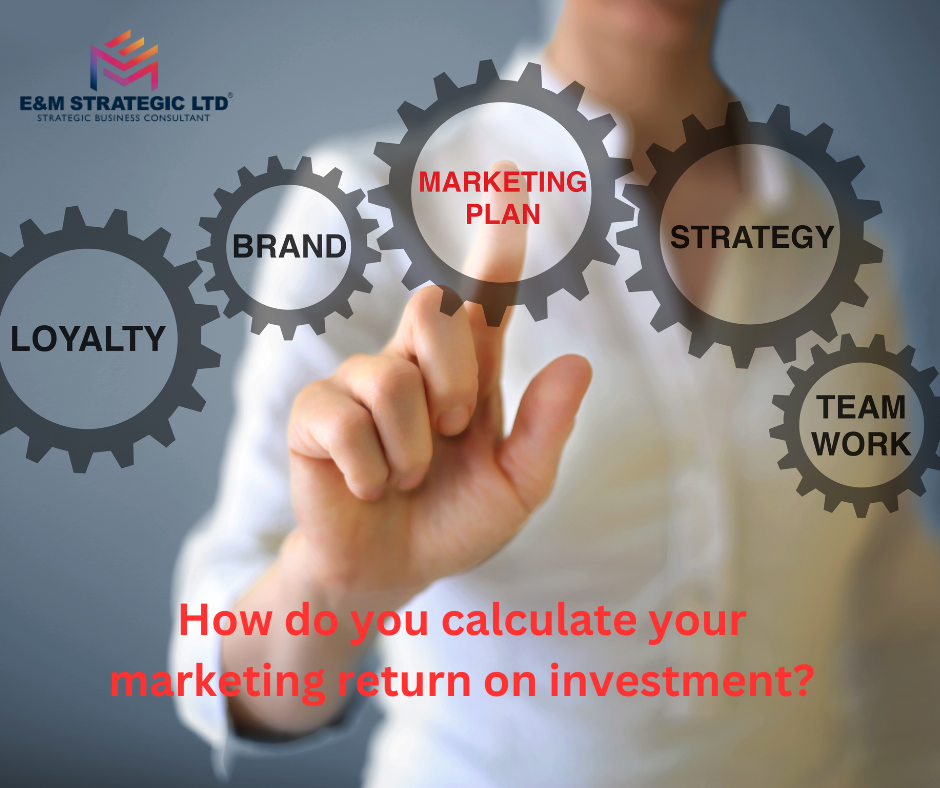
We rarely question how brands become household names. As consumers why should we, surely buying goods or services is proof enough of our loyalty.

Every marketeer is striving to achieve this, but how do they do it?

It is more complicated than you think, but there is always a starting point. Marketing planning and Strategy is the key to new product development and business growth. But great marketeers also understand the commercial impact the marketing plan has on a business.

  • How much is it going to cost a business to launch products to open new markets?
  • What is the strategy for doing this?
  • What resources does the business need to achieve this?

There are hundreds of questions that will require answers and a marketeers must find them. Establishing a budget will define the key areas of expenditure determine by the marketing strategy. Once there is an established marketing budget the business can begin to monitor its return on investment.

If a business needs a new machine to increase productivity a capital expenditure proposal is raised alongside a return-on-investment calculation. Marketing should be viewed in the same way – expenditure will require a ROI.

Maintaining this marketing discipline is how you build consumer brand loyalty. Business growth requires investment and clever marketing will achieve a return.

Regardless of the size of an organization, strategic marketing should always be part of the business plan and assigned a budget. Smaller businesses sometimes neglect the importance of marketing planning. They often buy services because they feel this is marketing. E & M’s definition of marketing strategy is.

A marketing strategy is a long-term plan for achieving a company’s goals by understanding the needs of customers and creating a distinct and sustainable competitive advantage. It encompasses everything from determining who your customers are to deciding what channels you use to reach those customers.”

 Measuring a return from any investment in a business is good practice. Marketing is no different – strategy with planning will define your objectives and budgets. Treat this as a business process and it will support any size of business that wants to grow.

If you have enjoyed reading this blog and would like to learn more about E&M Strategic Ltd and how we can help your business. Please visit our website. www.eandmstrategic.co.uk
How often do you hear sales managers refer to members of their team as “natural born salesperson.” The reality is not everybody is good at identifying a need or want for their products or services. Good sales technique will build confidence and convert wants into needs.

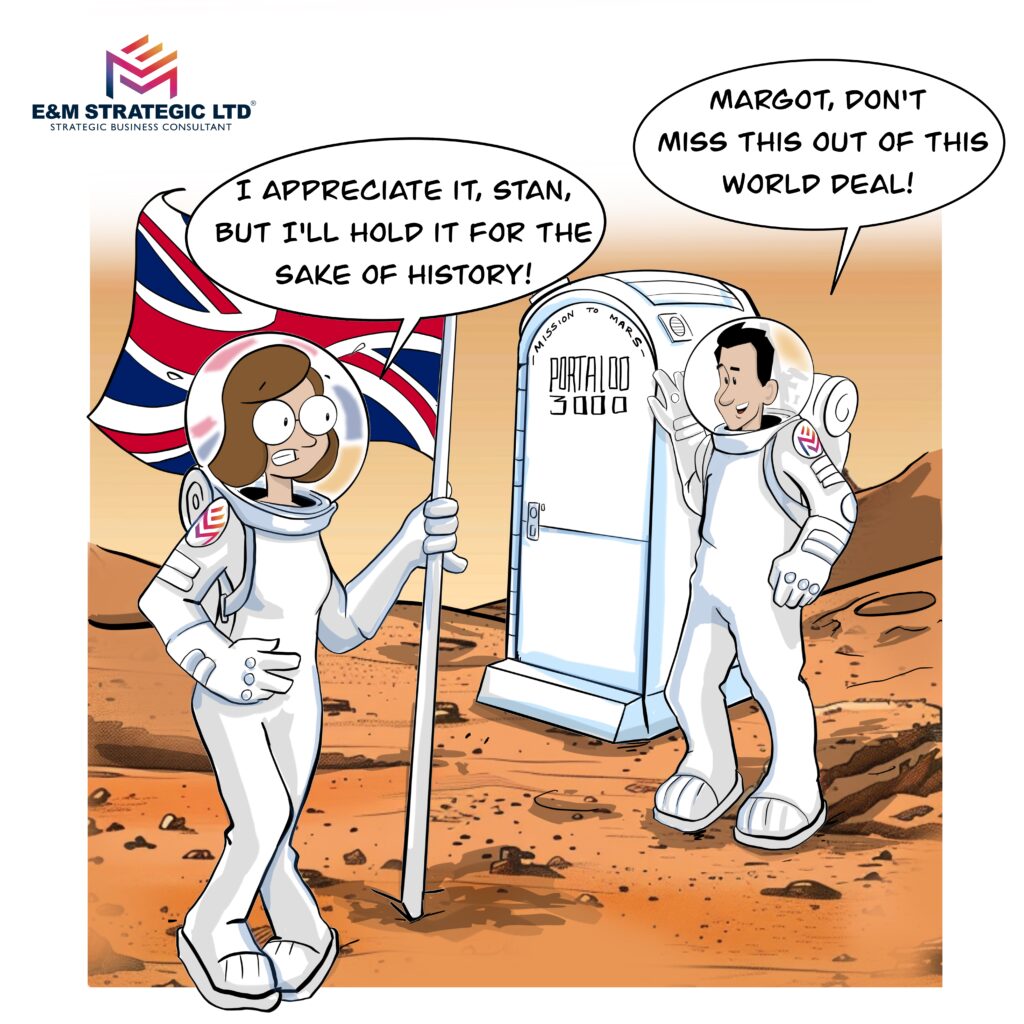
Margot the astronaut is about to plant the Union Jack on the surface of Mars. Stan has interrupted this momentous occasion with an “out of this world” portaloo sales opportunity. Yes, Stan has identified a need during this momentous occasion. However, Margot’s portaloo wants are less important than her need to keep the space suit fully zipped up. Margot will have to satisfy her needs when she rejoins the spaceship.

Customer’s may hide or play down their needs and wants during the sales meeting. Skilled questioning, natural curiosity and being interested in your customers business will often uncover them. Showing a genuine interest in a customer and their businesses will build amazing rapport. Not everybody does this naturally, but quality sales coaching will bring it out of even the least experienced seller.

If you have enjoyed reading this blog and would like to learn more about E&M Strategic Ltd and how we can help your business. Please visit our website. www.eandmstrategic.co.uk
 

Turnover is Vanity, Profit is Sanity.

How often do you hear this statement quoted by company accountants and business owners. But does the sales team really understand it and are their targets turnover or profit based.

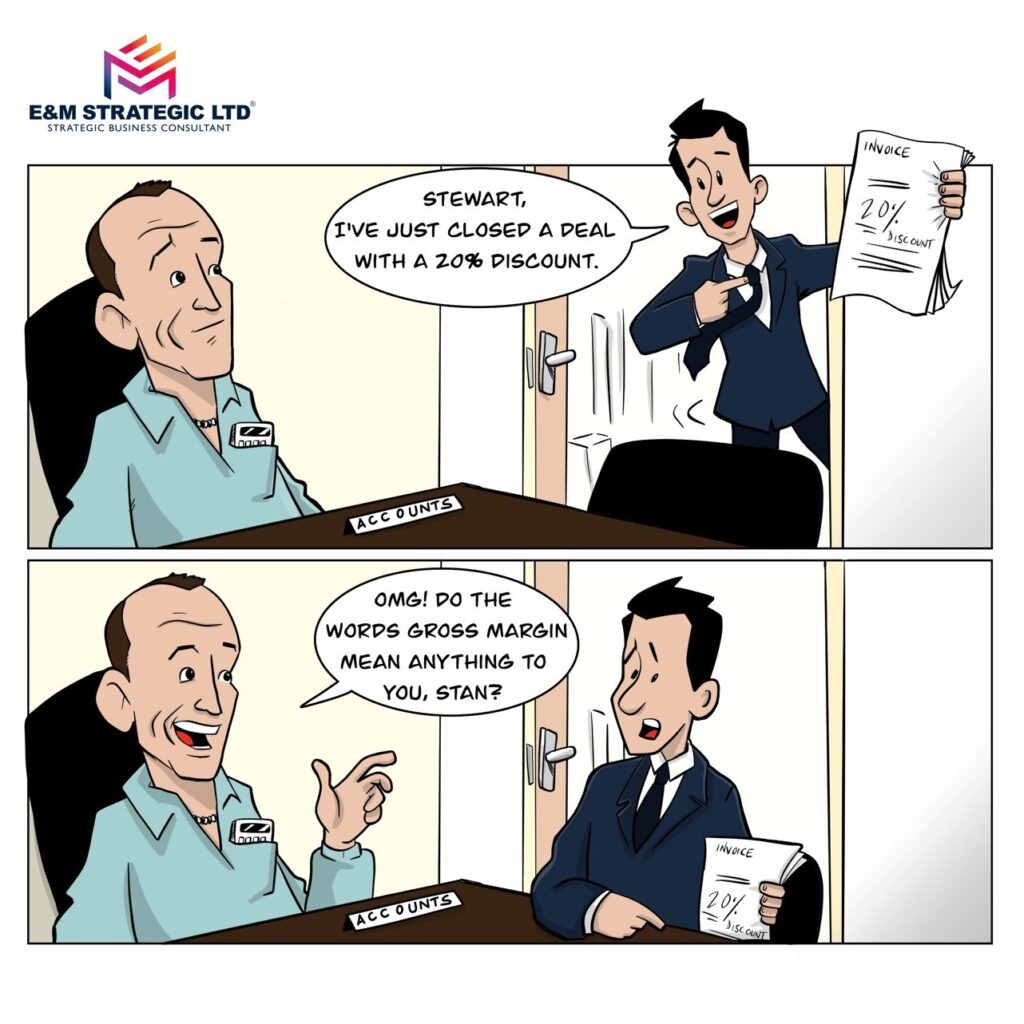
Stan has clearly won one of the biggest orders of his career. It only took a 20% discount to push the deal over the line. The reaction from Stewart the accountant is one of disbelief.

The reality is though, what boundaries were in place to prevent Stan making this decision. The impact on the business could be profound – firstly is there any profit in the deal and secondly does the business have capacity to deliver the order.

If you are running a manufacturing business with good gross margins, there should be net profit at the end. Capacity is the number of hours in the day you can produce. Therefore, your gross margin links to your capacity. Replacing profitable capacity with low margin business will have a negative impact on your business.

Stan should have been aware of the impact a 20% discount has on gross margins. Not all organisations want to share standard cost information with salespeople. If this is the case, you need to have a clear trade pricing strategy that the salesperson understands.

The other solution is to compensate price discounting with additional turnover. The company accountant can check how much additional turnover will make up for the lower margin business.

If you have enjoyed reading this blog and would like to learn more about E&M Strategic Ltd and how we can help your business. Please visit our website. www.eandmstrategic.co.uk


Building Customer Relationships.

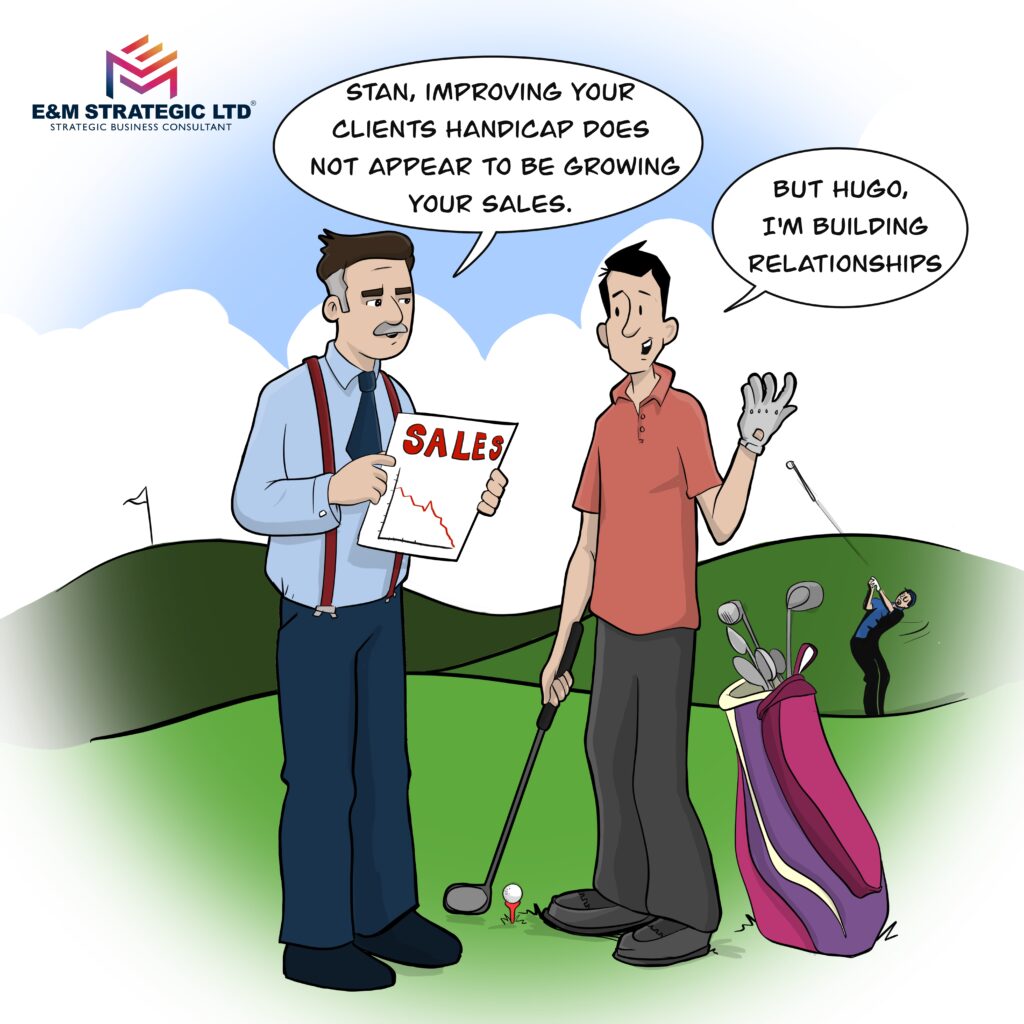
Stan has found the perfect way to improve his and the clients golf handicap through a shared passion for the sport.

Hugo understands the value of building customer relationships, but he is trying to measure its impact on Stan’s sales figures.

We can all agree there has to be a balance and most clients would respect this too. Organisation will often build into their supplier trading agreements anti bribery clauses. This will limit the amount of entertaining their employees can participate in with suppliers.

Question – is it Stan’s or the organisations customer?

“People buying from People” is good for building relationships but as an organisation grows it’s essential that clients buy from the business.

So, what is a better balance for the organisation. Why not have a company golf day or other event that you can invite all your clients to. Such events become massive networking opportunities for all those attending. More importantly the organisation can promote itself and show gratitude to all its valued clients.

If you have enjoyed reading this blog and would like to learn more about E&M Strategic Ltd and how we can help your business. Please visit our website. www.eandmstrategic.co.uk
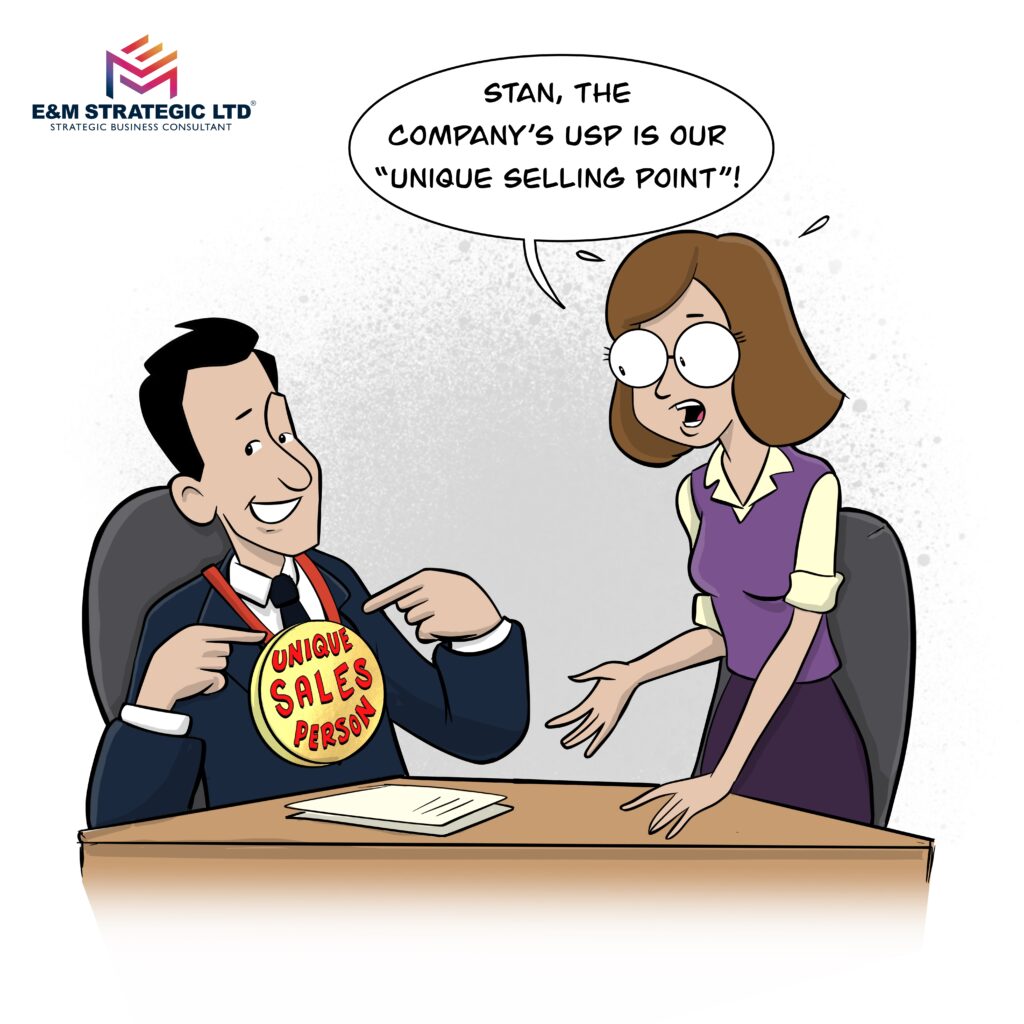
Margo has spent time defining the company’s unique selling point (USP).

Stan’s sense of self-importance has got the better of him – he sees himself as the companies USP /Unique Sales Person (Salesperson)

The importance of a USP to an organisation is that it is not about individuals or products. Yes, people buy from people, but people also leave organisations.

What is it about your business that clearly defines your benefits over competitors. When you ask colleagues in different departments, “what is the company’s USP” you will receive a unique perspective each time.

Often the extra mile you go to help clients with back-office services, or an improved customer experience may not appear in your USP. Delivering what you promised every time is the most important part of your trading and should form the core of your USP. Do not assume your USP is about your brand, people, or products.

E&M Strategic advises that you publish your USP. Every member of the organisation should remember it. When a potential client asks you what you do, then quote the USP. It should take no longer than 1 minute to say.

Good luck in defining your USP.

If you have enjoyed reading this blog and would like to learn more about E&M Strategic Ltd and how we can help your business. Please visit our website. www.eandmstrategic.co.uk

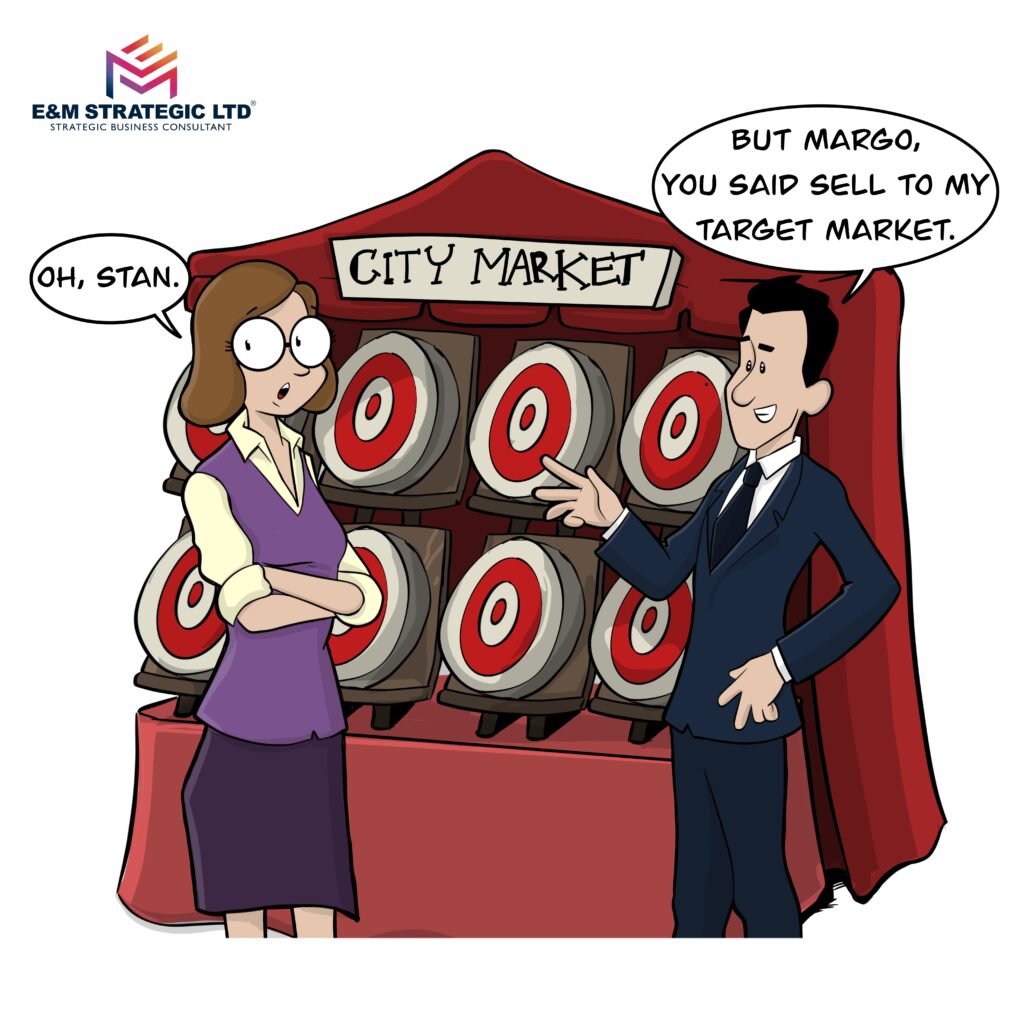
Stan has clearly taken the definition of a “target market” literally –  frustrating Margot. 

The marketing plan needs to accurately define the “target market” so the products, services, pricing, and communication strategies work together.

If your products and services are not what your target market requires then they will not sell. It sounds obvious but it is surprising that so many businesses do not define it.

This failing is more common when companies develop new products and services and try to sell them to established target markets. Often new products and services will require research into their target markets. The clever strategy is to sell new products or services to established routes to market. This reduces the marketing costs dramatically.

More importantly the whole business understands the strategy and the internal and external communications are more efficient. However, this is not always possible, so marketeers need to build target market strategy for each sector in the business plan.

If you have enjoyed reading this blog and would like to learn more about E&M Strategic Ltd and how we can help your business. Please visit our website. www.eandmstrategic.co.uk
Margot and Stan are depicted here in their clearly defined roles acting out the, “what came first chicken or the egg” metaphor.  But is the organisation they are working for planning the marketing and sales strategy.

How many times do you see job descriptions like Sales and Marketing Manager or Sales and Marketing Director advertised.

When you read the job descriptions the companies recruiting are often looking for an experienced salesperson who can pick up a bit of the marketing.

But they rarely define what they mean by “Marketing”, this suggests that the individual will most likely look after a bit of social media, trade marketing and probably organising the odd business expo.

Let’s be accurate now, the strategic importance of marketing is to ensure your products or services are priced to enable you to compete profitably, designed and developed so they are fit for purpose, and your routes to market are the right ones to satisfy demand.  

The final part of the strategy that your target customers need to know is – who you are, what you are selling, where they can buy your products or services and how is it going to benefit them.

The marketing plan and strategy need to be in place before you start selling.  Salespeople are a cost to the business and their investment needs to be recouped in the short term. The sales process is more efficient when marketing has defined the products or services, target customers, pricing, and communication strategy.

So, what comes first sales or marketing – try selling a product or service without doing the marketing before and see how far you get.

If you have enjoyed reading this blog and would like to learn more about E&M Strategic Ltd and how we can help your business. Please visit our website. www.eandmstrategic.co.uk

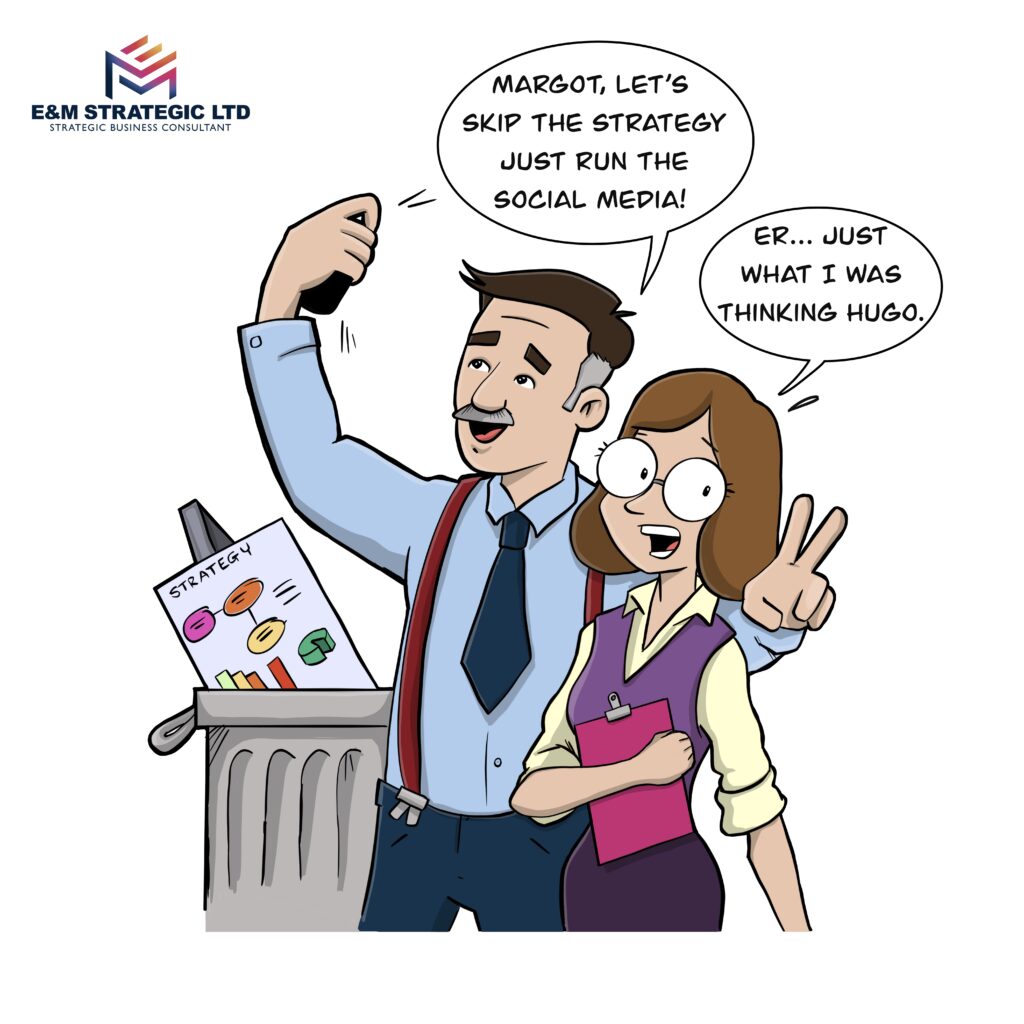
“Despite Margots’ attempts to develop a marketing plan that identifies the target audience and defines the most effective communication strategy Hugo is impatient and thinks marketing is all about social media and nothing else”.

Let’s be clear here – social media is part of our lives and influences our buying behaviour. It’s one of the most valuable tools in the marketing communications planning strategy.

Why do most companies or social media specialist fail even before they start a campaign?

The three avoidable reasons for failure are: –

  • No original content.
  • No communication strategy in place.
  • No alignment of the social media campaign with other marketing activities.

Social media is widely viewed and accepted as an important tool for the marketeer. Poor marketeers however view social media as justifying to the business or clients that “we are actively marketing” on your behalf. Its instant visibility is proof of activity.

This approach will often lead to poor content and confusing messages. In most cases it will lead to no content.

To avoid this classic error, you should always start with your “Marketing Plan”. This will define your strategy for promoting your message to your target customer. Next it’s the time to work out what they need to see or hear from you.

It is often quoted that 50% of all marketing spend is wasted – but which 50%. Marketing is almost a science which is trying to calculate what will sell to your target market.

To avoid failing before you even start you need to do 5 simple things before you press send on your social media campaign.

  • Plan your social media campaign for 6 months in advance and make sure your content is ready.
  • Map your social media campaign alongside other events in your promotional calendar.
  • Synchronize your social media campaign content with other planned promotional activity in the year.
  • Align the social media message with other advertising and PR campaigns so that the target customer is clear on what you are promoting.
  • Measure the results. Marketing is about increasing sales and you need to evidence that your social media campaign is reaching the defined target market.

E&M Strategic is all about planning your business or marketing strategy. Our advice to clients is to ensure the business is on board with the strategy before you hit the spend key in the marketing budget.

If this article has been of help or you would like to comment, please do so or contact us about how we can help get the most out of your social media campaign.