

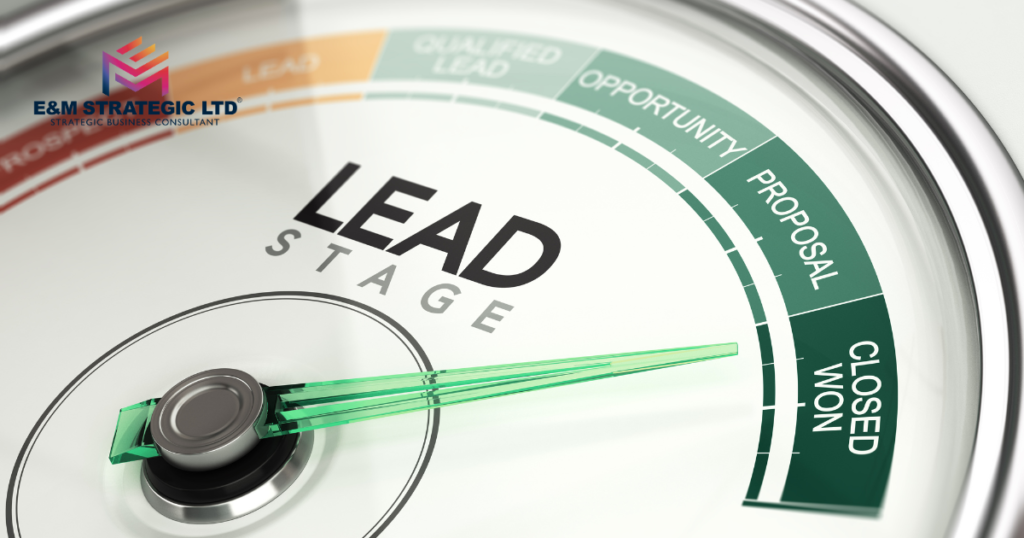
For many SMEs, the sales pipeline can create a sense of reassurance. There are enquiries in progress, quotations have gone out and a few prospects seem interested. On paper, things can look reasonably healthy.
But I often ask business owners a simple question: how much of that pipeline is genuinely likely to turn into profitable business?
That is where the real conversation starts.
Effective sales pipeline management for SMEs is not about having a long list of names on a spreadsheet or CRM system. It is about understanding which opportunities are real, what stage they are at, what needs to happen next and whether the overall pipeline is strong enough to support future revenue targets.
For SMEs across Staffordshire, Wolverhampton, the West Midlands, Telford and Shropshire, this matters more than ever. When costs are under pressure, businesses need greater certainty around future sales. An optimistic pipeline can be reassuring, but it can also be misleading.
What does a strong sales pipeline really look like?
A good sales pipeline should show every genuine opportunity and where that prospect currently sits within the buying process.
Depending on the business, that might include initial enquiry, qualification, meeting, proposal, negotiation and final decision.
Every opportunity should also have a value, an expected decision date and a clearly defined next action.
One question I regularly ask SME owners is:
If your current pipeline performs as expected, will it generate enough profitable revenue to achieve your targets?
If the answer is unclear, then the pipeline probably needs closer attention.
A strong pipeline should also form part of a wider SME sales strategy, linking lead generation, sales activity, conversion and forecasting.
Are all your opportunities genuine?
One of the most common problems I see is optimism.
A prospect has had a meeting, asked for some information or responded positively to a proposal, so they remain in the pipeline for weeks or even months.
But interest is not the same as intent.
A genuine opportunity should normally have a clear requirement, a realistic timescale and some understanding of how the buying decision will be made.
I would rather see a smaller, realistic pipeline than a large one full of opportunities that have little chance of progressing.
Removing weak opportunities can make the figures look worse initially, but it gives the business a far better basis for planning.
How old are your opportunities?
Age is another important indicator.
If your normal sales cycle is six weeks but an opportunity has been sitting there for six months with very little movement, is it still really an opportunity?
There may be valid reasons for delays, especially with larger contracts or more complex buying decisions, but ageing opportunities can quickly distort the overall picture.
When I review a pipeline, I look closely at anything that has stopped moving. It may need renewed attention, a different approach or, in some cases, removal altogether.
Does every opportunity have a next action?
This is one of the simplest tests of pipeline quality.
“We need to follow them up” is not a next action.
“Telephone the managing director on 12 October to review the proposal” is.
Every genuine opportunity should have a specific next step, a responsible person and a date.
Without this discipline, follow-up becomes inconsistent and potentially valuable opportunities can quietly disappear.
For many SMEs, improving this one area can make a noticeable difference to sales performance.
Are you measuring conversion rates?
Knowing the total value of the pipeline is useful, but it only tells part of the story.
An SME should understand how effectively opportunities move through each stage of the sales process.
If 50 enquiries produce 20 meetings, 10 proposals and three orders, there is valuable information in those figures.
Where are prospects being lost?
Are the wrong enquiries being generated? Are meetings failing to uncover the real customer need? Are proposals failing to demonstrate enough value?
In my experience, the answer is often not “we need more leads”. The real issue is that the business is not converting enough of the opportunities it already has.
That is where targeted sales coaching and consultancy can make a real difference.
Is your pipeline actually large enough?
A £500,000 pipeline does not mean £500,000 of future revenue.
If the business usually converts 20% of qualified opportunities, the realistic expectation is much lower.
This is why I encourage SMEs to work backwards from their revenue objectives.
If a business needs £100,000 of new sales and typically converts one in four opportunities, it may need around £400,000 of genuinely qualified pipeline value.
That relationship between pipeline value and conversion rate is critical if forecasts are going to mean anything.
Are you relying on too few customers?
Another issue I frequently see is concentration risk.
The total pipeline might look healthy, but when you examine it more closely, most of the potential value depends on one or two large opportunities.
If one of those slips or disappears, the forecast changes immediately.
A stronger pipeline contains a sensible spread of opportunities across customers, sectors or products. This reduces dependency and gives the business greater resilience.
Are sales and marketing working together?
A weak pipeline is not always a sales problem.
If there are not enough new opportunities entering the top of the pipeline, the business may need to look at its marketing, target market or value proposition.
Sales and marketing should work together. Marketing creates awareness and opportunity; sales turns that opportunity into revenue.
For SMEs across Staffordshire, the West Midlands and Shropshire, that may mean reviewing networking, digital marketing, strategic partnerships, direct prospecting and existing customer development.
Review the pipeline before it becomes a problem
One of the biggest advantages of good pipeline management is that it gives you an early warning.
If there are not enough opportunities entering the pipeline today, the impact on turnover may not show for several months. By then, the problem is much harder to correct.
A regular, honest pipeline review allows SME owners and management teams to challenge assumptions, focus activity and make decisions based on reality rather than hope.
About Phil Edwards
Phil Edwards is the founder of E&M Strategic Ltd and works with SME owners and sales teams to improve sales performance, pipeline management and business growth.
His approach is practical: understand what is really happening in the pipeline, identify where opportunities are being lost and agree clear, measurable actions to improve performance.
If you are unsure whether your current sales pipeline is genuinely capable of delivering your targets, an initial consultation provides an opportunity to review the position and identify where improvements may be needed.
To arrange an initial consultation with Phil Edwards, contact enquiries@eandmstrategic.co.uk.