

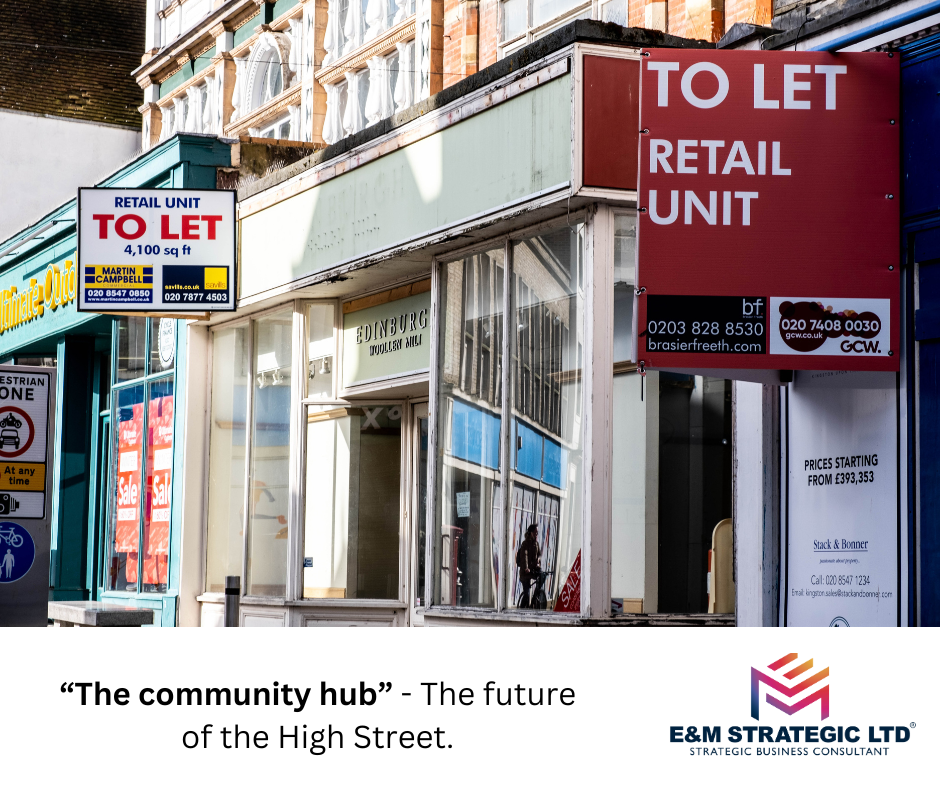
The UK High Street has been a cornerstone of community life for centuries. From its humble beginnings as marketplaces in medieval towns to bustling centres of commerce in the modern era, the High Street has served as a barometer for societal and economic trends. However, the past two decades have witnessed seismic shifts in its landscape.
Founder of E&M Strategic Ltd Phil Edwards has worked with national and independent retailers to navigate these changes. This article delves into the evolution of the UK High Street, its current challenges, and its promising future, drawing on insights and data from the British Retail Consortium (BRC).
The Evolution of the High Street: A 20-Year Retrospective
Over the last 20 years, the UK High Street has undergone a profound transformation. The advent of e-commerce, changing consumer behaviours, and economic turbulence have redefined its role in the community. In 2003, online shopping accounted for a mere 5% of retail sales. Fast forward to 2023, and this figure has surged to over 30%, according to the British Retail Consortium. Giants like Amazon and ASOS have captured a significant share of the retail market, leaving traditional bricks-and-mortar stores struggling to compete.
The 2008-2009 financial crisis further accelerated the decline of the High Street. The recession brought about reduced consumer spending, increased business closures, and rising unemployment, leaving many towns with vacant storefronts. Retailers that were once household names—Debenhams, BHS, and Woolworths—disappeared from the High Street, marking the end of an era.
The rise of discount retailers and charity shops has also reshaped the High Street. Poundland, B&M Bargains, and similar stores have thrived, meeting consumer demand for affordability. This trend reflects a shift in priorities: consumers now seek value and convenience more than anything else. Meanwhile, services such as nail salons, gyms, and coffee chains have proliferated, signalling a pivot from traditional retail to lifestyle and leisure offerings.
The British Retail Consortium reports that today, 40% of High Street premises are occupied by non-retail businesses. These include restaurants, entertainment venues, and health services, highlighting how the High Street is evolving to meet new demands.
The Current State of the High Street
Despite its challenges, the High Street remains a vital part of British culture. In urban centres like Manchester, Leeds, and Birmingham, some High Streets have thrived by embracing mixed-use developments that combine retail, dining, and entertainment. However, smaller towns and rural areas often paint a bleaker picture, with an average 10-15% drop in footfall compared to pre-pandemic levels, according to the BRC.
Vacancy rates remain a pressing issue. In some regions, one in five retail units is unoccupied. These empty shops are not just an economic problem—they also affect community morale, making High Streets appear neglected and uninviting. However, some towns have turned this challenge into an opportunity. Initiatives like “Meanwhile Use” schemes have repurposed vacant spaces for pop-up shops, art exhibitions, and start-ups, injecting new life into struggling areas.
Independent retailers have emerged as a bright spot. The pandemic highlighted the value of local businesses, as shop-local campaigns gained traction. From artisan bakeries to bespoke gift shops, these businesses offer unique products and foster community loyalty. They represent a critical component of the High Street’s revival.
Lessons from Abroad: Global Innovations in High Street Revitalisation
The UK can draw inspiration from international examples of High Street revitalisation. In Melbourne, Australia, urban planners have transformed “Laneways” into vibrant hubs featuring pop-up shops, art installations, and outdoor dining. These initiatives attract foot traffic, create jobs, and foster a sense of community.
Similarly, in Copenhagen, Denmark, the city’s commitment to pedestrian-friendly streets has revitalised local commerce. Wide pavements, bike lanes, and greenery create an inviting atmosphere, encouraging residents to spend more time—and money—on the High Street.
The concept of the “15-minute city,” pioneered in Paris, France, offers another compelling vision. This model aims to create self-sufficient neighbourhoods where all essential services are within a 15-minute walk or cycle. By focusing on sustainability, accessibility, and community, this approach could inspire UK High Streets to become multifunctional spaces that cater to modern urban lifestyles.
The Future of the UK High Street
To thrive in the coming decades, the UK High Street must embrace adaptability, innovation, and sustainability. Successful High Streets of the future will be multifunctional spaces, blending retail, housing, leisure, and community services.
Technology and the High Street
Technology will be a crucial driver of this transformation. Augmented reality (AR) and artificial intelligence (AI) can revolutionise the shopping experience, making it more interactive and personalised. For example, AR apps can allow customers to try on clothes virtually, while AI-powered tools can offer tailored product recommendations.
Retailers are already experimenting with these technologies. Nike’s flagship store in New York uses AR mirrors to showcase how products look in different settings, while Amazon’s AI-powered grocery stores offer a seamless checkout experience. Adopting such innovations could help UK High Streets compete with the convenience of online shopping.
Mixed-Use Developments
Future High Streets will feature a mix of uses. Retail will coexist with housing, offices, and community hubs, creating vibrant, round-the-clock spaces. This approach can help reduce vacancy rates and attract a diverse range of visitors.
For example, in Cambridge, the Lion Yard development integrates retail spaces with student housing and leisure facilities. This model could be replicated across the UK, offering a blueprint for sustainable, multifunctional High Streets.
Sustainability and Green Infrastructure
Sustainability will play a central role in shaping the High Street of the future. Green infrastructure—such as rooftop gardens, solar panels, and energy-efficient buildings—can reduce environmental impact while attracting eco-conscious consumers. Urban gardens and green walls could transform High Streets into attractive, health-enhancing spaces.
Initiatives like this align with the UK’s net-zero goals and could be supported by government grants or private investment. Such measures would not only benefit the environment but also boost footfall by making High Streets more pleasant and welcoming.
Placemaking and Community Focus
The High Street’s future purpose goes beyond commerce—it will serve as a social and cultural hub. Placemaking initiatives, which focus on designing spaces that foster community engagement, can create High Streets that people want to visit, not just for shopping, but for connection and recreation.
Community events, farmers’ markets, and cultural festivals are just some ways to bring people back to the High Street. For example, Chester’s Roman Amphitheatre often hosts outdoor performances, drawing locals and tourists alike to the city centre. Such events not only boost local businesses but also create a sense of pride and identity.
Challenges Ahead
While the vision for a revitalised High Street is promising, challenges remain. Rising rents and business rates continue to burden retailers, particularly independents. The digital divide also poses a risk, as smaller businesses may struggle to adopt the technologies needed to compete in a tech-driven retail environment.
Collaboration between local councils, businesses, and community groups will be essential to overcoming these hurdles. Government support, such as grants or tax breaks for small businesses, could also play a significant role in fostering innovation and resilience.
Conclusion
The UK High Street stands at a crossroads. It has weathered decades of change, and while challenges persist, opportunities abound. By embracing innovation, sustainability, and community-centric approaches, the High Street can evolve into a vibrant, multifunctional space that serves as the heart of modern communities.
E&M Strategic Ltd would like to witness the rebirth of the High Street. Stakeholders, planners, and retailers working together for the communities it supports, we can ensure that the UK High Street remains a vital part of our national identity—one that is not only economically resilient but also socially enriching and environmentally sustainable.
For tailored insights and strategies to future-proof your business, contact E&M Strategic Ltd today.